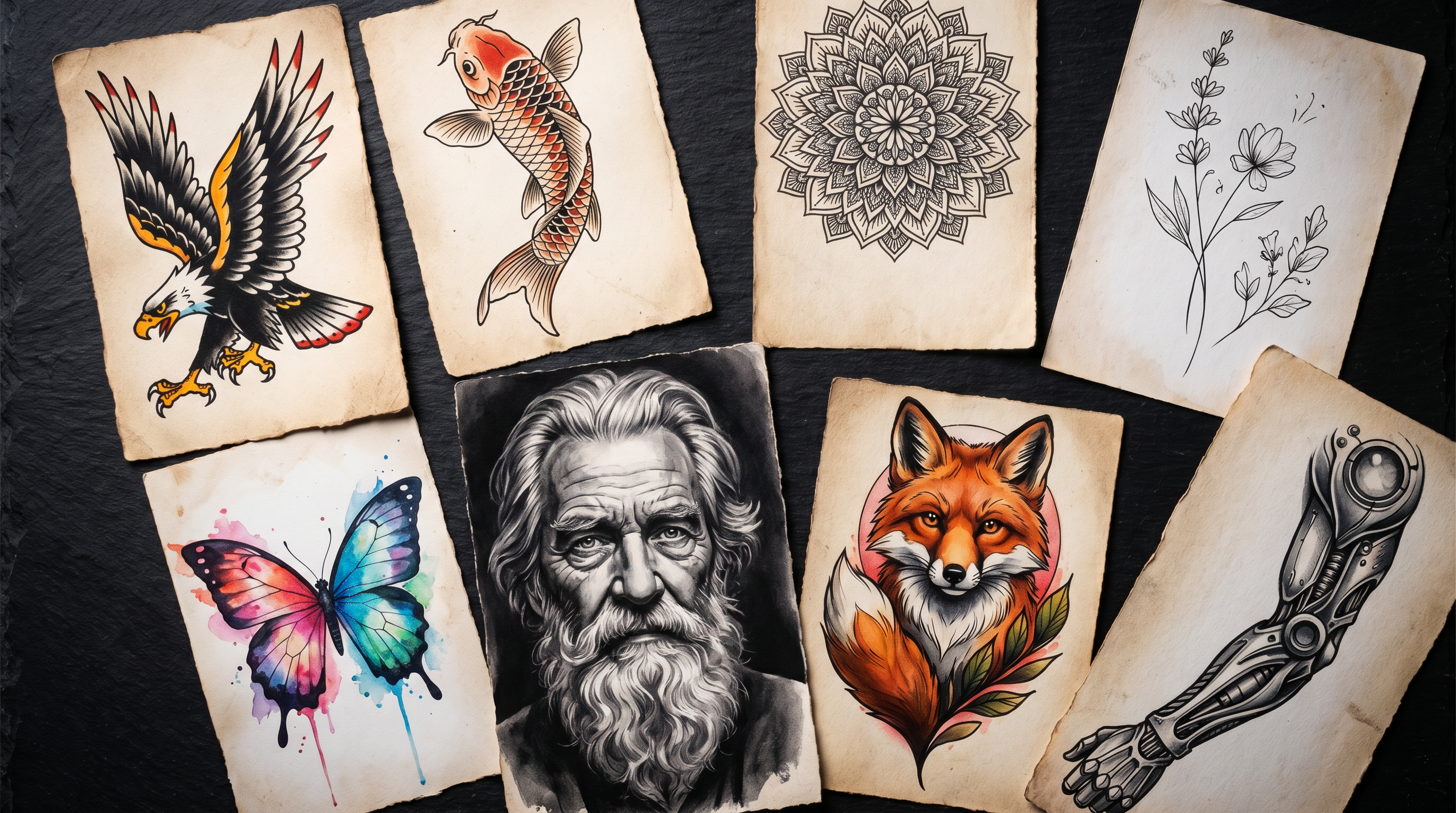
The tattoo world is vast. Walk into ten different studios and you might encounter ten completely different aesthetic universes — bold, graphic flash on one wall, hyperrealistic portraits on another, delicate botanical line drawings in a third. Tattoo art is not a single discipline. It is a collection of distinct styles, each with its own history, technical requirements, and community of practitioners.
Understanding the major styles is essential whether you are a client trying to find the right artist or an artist trying to position your work in the marketplace. Here is a comprehensive breakdown.
American Traditional
American Traditional is the foundation of Western tattooing. Characterized by bold black outlines, a limited color palette (red, yellow, green, blue, black), and iconic imagery — eagles, panthers, roses, daggers, anchors, pin-ups — Traditional tattoos are built to last. The bold lines and solid fills hold up exceptionally well over decades, making this one of the most age-resistant styles in existence.
The style traces its roots to the early 20th century and artists like Norman Collins (Sailor Jerry) and Bert Grimm. It remains one of the most popular styles in the world precisely because it works so reliably.
Neo-Traditional
Neo-Traditional takes the structural foundations of American Traditional — bold outlines, strong composition — and expands them with more detail, a wider color range, and more complex imagery. Where Traditional keeps things simple and iconic, Neo-Traditional allows for more nuanced illustration, more color gradients, and more elaborate subject matter.
It is a style that rewards artists who can draw well, since the increased complexity requires strong illustrative skills beyond just technical tattooing ability.
Realism and Photorealism
Realism aims to reproduce the appearance of photographs or three-dimensional objects on skin. Portraits, animals, landscapes, and objects rendered with precise shading, value transitions, and detail. When done well, a Realism tattoo looks like a photograph embedded in skin.
This is one of the most technically demanding styles. The margin for error is extremely small — a slightly off-proportion nose in a portrait is immediately visible in a way that a slightly imperfect rose in a Traditional piece is not. Finding a skilled Realism artist requires careful portfolio review. Look specifically at their shading transitions and how they handle fine detail.
Micro-Realism applies the same principles at a much smaller scale, creating tiny, detailed realistic images that require exceptional precision and a very steady hand.
Fine Line
Fine Line tattoos use extremely thin, delicate linework to create elegant, minimal designs. Botanical illustrations, geometric patterns, script, and simple imagery rendered in single-needle or fine-gauge work. The aesthetic is clean, sophisticated, and understated.
Fine Line requires a different skill set than bold styles — the precision demanded by thin lines is unforgiving. It is also worth noting that Fine Line tattoos require more careful long-term maintenance, as thin lines can spread slightly over time. Sun protection and moisturizing are especially important.
Japanese / Irezumi
Japanese tattooing is one of the oldest and most sophisticated tattoo traditions in the world. The style is characterized by rich storytelling through specific imagery — koi fish representing perseverance, dragons representing wisdom and power, tigers representing strength, cherry blossoms representing the transience of life — arranged in highly structured compositions designed to flow with the body's natural contours.
Full Japanese sleeves and body suits are among the most ambitious tattoo projects a person can undertake, often requiring years of work and multiple sessions. The style demands an artist who understands not just the technical execution but the cultural and symbolic language of the tradition.
Geometric and Dotwork
Geometric tattoos use precise lines, shapes, and patterns to create structured, mathematical compositions. Sacred geometry, mandalas, and architectural patterns are common subjects. Dotwork uses stippling — thousands of individual dots — to create shading and texture without traditional linework.
Both styles require exceptional precision and patience. A single misplaced line in a geometric piece can throw off the entire composition's symmetry.
Watercolor
Watercolor tattoos mimic the appearance of watercolor paintings, with soft washes of color, visible brushstroke textures, and often minimal or no black outlines. The effect is painterly and impressionistic.
It is worth having an honest conversation with any Watercolor artist about longevity. Without strong black outlines to anchor the color, Watercolor tattoos can fade and blur more quickly than other styles. Many experienced artists recommend incorporating some linework to preserve the design over time.
Blackwork and Tribal
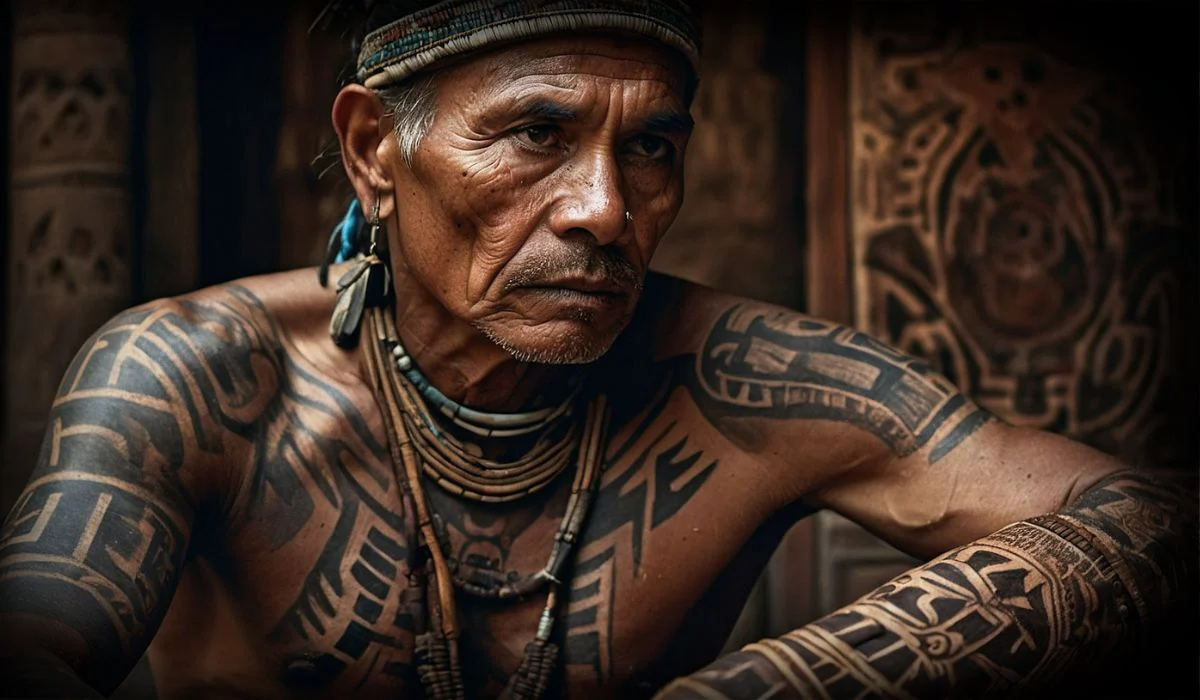
Blackwork encompasses any tattoo that uses only black ink, often in bold, graphic patterns. This includes Tribal styles from Polynesian, Maori, and other indigenous traditions, as well as contemporary Blackwork that draws on those traditions or creates entirely new graphic languages.
Tribal tattoos carry significant cultural weight. If you are interested in traditional Polynesian or Maori designs, seek out artists who have a genuine connection to and understanding of those traditions.
Finding Your Style on InkFreakz
InkFreakz allows you to browse artists and tattoos filtered by style. Whether you know exactly what you want or you are still exploring, the platform makes it easy to see what each style looks like in practice and find artists who specialize in it. Browse the Explore page to start discovering.