You just left the studio with fresh ink. The artist wrapped it, gave you a card with instructions, and sent you on your way. Now what? The next two to four weeks are critical. How you care for your tattoo during the healing process will directly determine how it looks for the rest of your life. Faded patches, blown-out lines, and dull color are often not the artist's fault — they are the result of poor aftercare.
This guide covers everything you need to know, week by week, from the moment you leave the studio.
The First 24 Hours
Your artist will cover your fresh tattoo with either a traditional plastic wrap or a modern second-skin bandage (also called saniderm or tegaderm). If they used a second-skin bandage, you can typically leave it on for 24 to 72 hours. If they used plastic wrap, remove it after 2 to 4 hours.
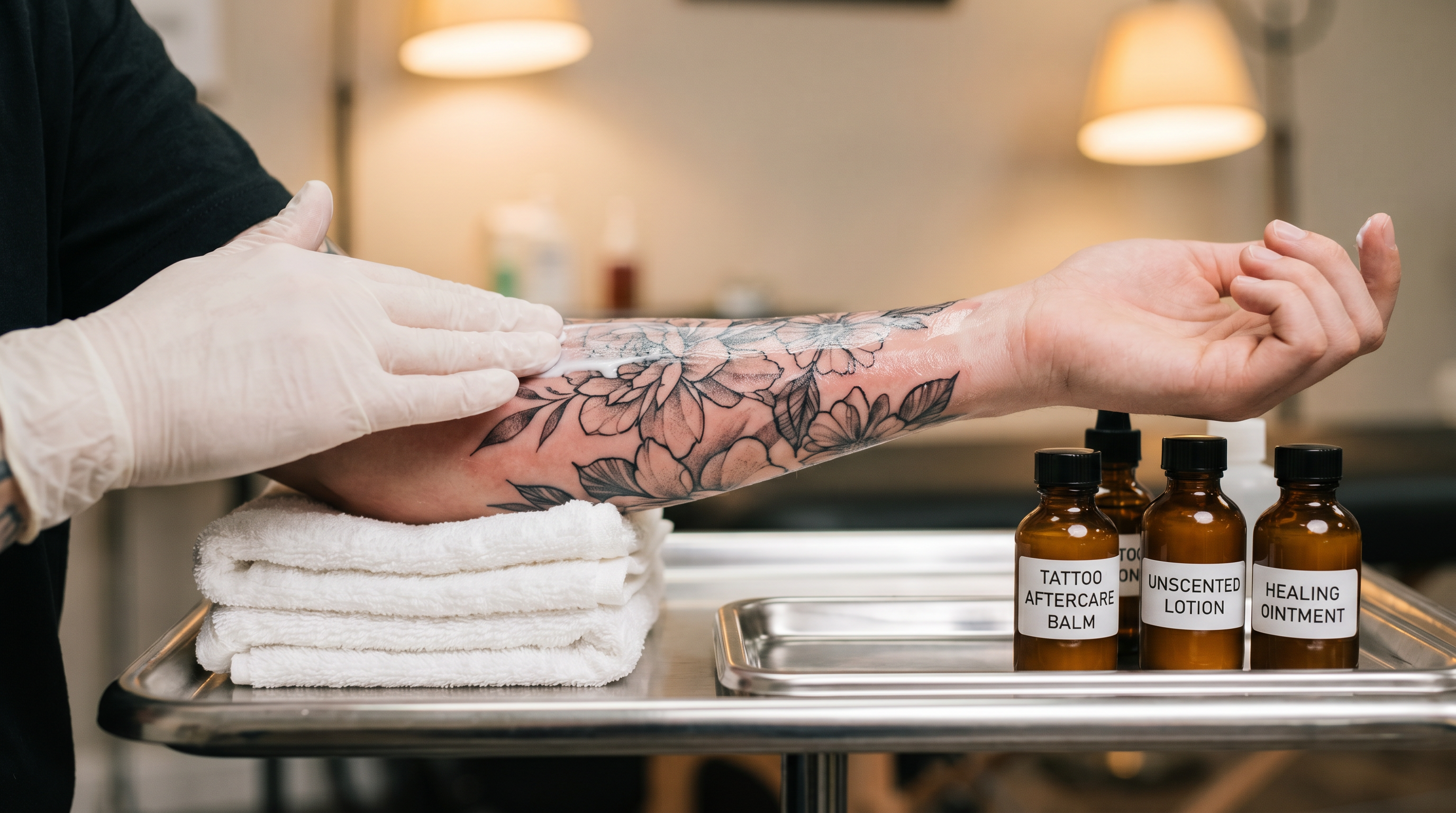
When you remove the initial covering, gently wash the tattoo with clean hands using a fragrance-free, antibacterial soap. Use lukewarm water — never hot. Pat dry with a clean paper towel (not a cloth towel, which can harbor bacteria). Apply a thin layer of unscented moisturizer or a dedicated tattoo aftercare product.
During the first 24 hours, your tattoo will likely ooze a small amount of plasma, ink, and blood. This is completely normal. It is your body's natural healing response. Do not panic, and do not over-wash.
Week One: The Inflammation Phase
During the first week, your tattoo will be red, swollen, and tender. This is normal. The skin is in active repair mode. Your job is to keep it clean, moisturized, and protected.
Wash the tattoo two to three times per day with fragrance-free soap. After each wash, apply a thin layer of moisturizer. The key word is thin — you want the skin to breathe. Thick layers of product can trap moisture and bacteria, leading to infection.
Avoid submerging the tattoo in water. No baths, no swimming pools, no hot tubs. Showers are fine, but keep the tattoo out of direct water pressure. Avoid direct sunlight. Wear loose, breathable clothing over the area.
Products to use: Lubriderm unscented, Cetaphil, Aquaphor (sparingly), or dedicated tattoo aftercare products like Hustle Butter or After Inked. Avoid Vaseline, which is too occlusive and can pull ink.
Week Two: The Peeling Phase
Around day 5 to 7, your tattoo will begin to peel. This looks alarming the first time you experience it — it can look like the color is coming off. It is not. The peeling is the dead outer layer of skin shedding, which is a normal and necessary part of healing.
Do not pick, scratch, or peel the skin. This is the most important rule of week two. Picking at peeling skin can pull ink out of the dermis and leave patchy, faded areas that will require a touch-up. If the itching is unbearable, gently tap the area — do not scratch.
Continue washing and moisturizing. The tattoo may look dull or cloudy during this phase. That is also normal. The color and clarity will return once the outer layer has fully shed.
Weeks Three and Four: Surface Healing
By week three, the surface of the tattoo should look healed. The peeling is done, the color is returning, and the tenderness is gone. However, the deeper layers of skin are still healing. The tattoo may still have a slightly raised texture or a shiny appearance — this is the skin continuing to repair itself beneath the surface.
Continue moisturizing daily. Start applying SPF 30 or higher sunscreen whenever the tattoo will be exposed to sunlight. UV radiation is the single biggest enemy of tattoo longevity. Sun damage causes fading and blurring that cannot be reversed without a cover-up or rework.
Long-Term Care
Once fully healed (typically 4 to 6 weeks for most tattoos, longer for large pieces), the most important ongoing care is sun protection. Apply sunscreen every time the tattoo will be in the sun. Keep the skin moisturized year-round. Stay hydrated. Healthy skin holds ink better.
If you notice any signs of infection — excessive redness, swelling that is getting worse rather than better, pus, fever, or red streaks radiating from the tattoo — see a doctor immediately. Infections are rare when proper aftercare is followed, but they do happen.
Signs Your Tattoo Is Healing Correctly
- Mild redness and swelling in the first few days, gradually decreasing
- Peeling and flaking around days 5 to 10
- Mild itching during the peeling phase
- Dull or cloudy appearance during peeling, clearing up afterward
- Slightly raised texture for several weeks after surface healing
Signs Something May Be Wrong
- Redness and swelling that is getting worse after day 3
- Yellow or green discharge (plasma is clear or slightly yellow, pus is thick and opaque)
- Fever or chills
- Red streaks extending from the tattoo
- Extreme pain that is not improving
Your artist wants your tattoo to heal beautifully. Most reputable artists offer free touch-ups for healing issues caused by normal skin behavior. If you have questions about your healing process, reach out to your artist directly through your InkFreakz booking history — the platform keeps your communication history in one place so you never lose contact with the person who did your work.