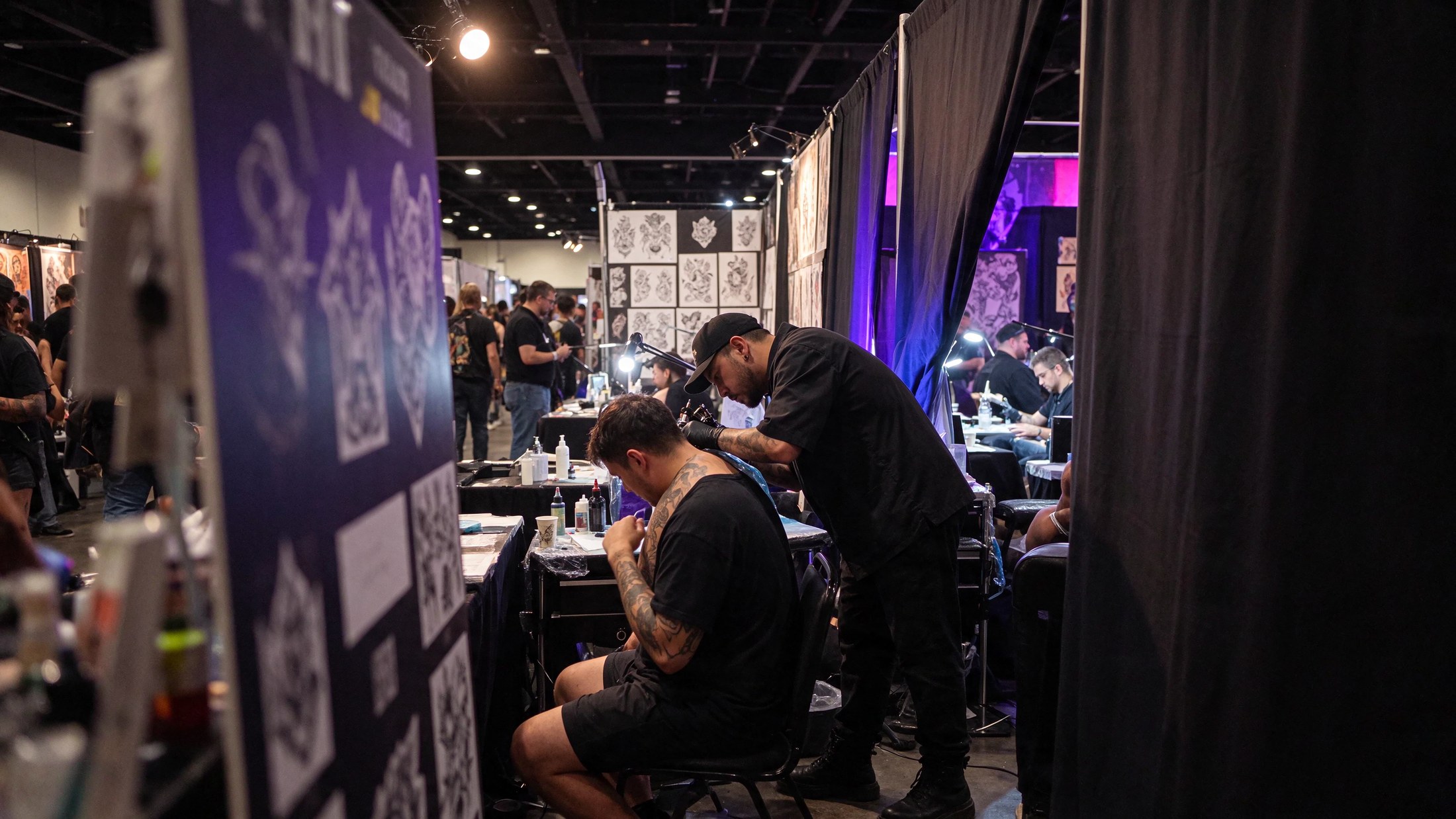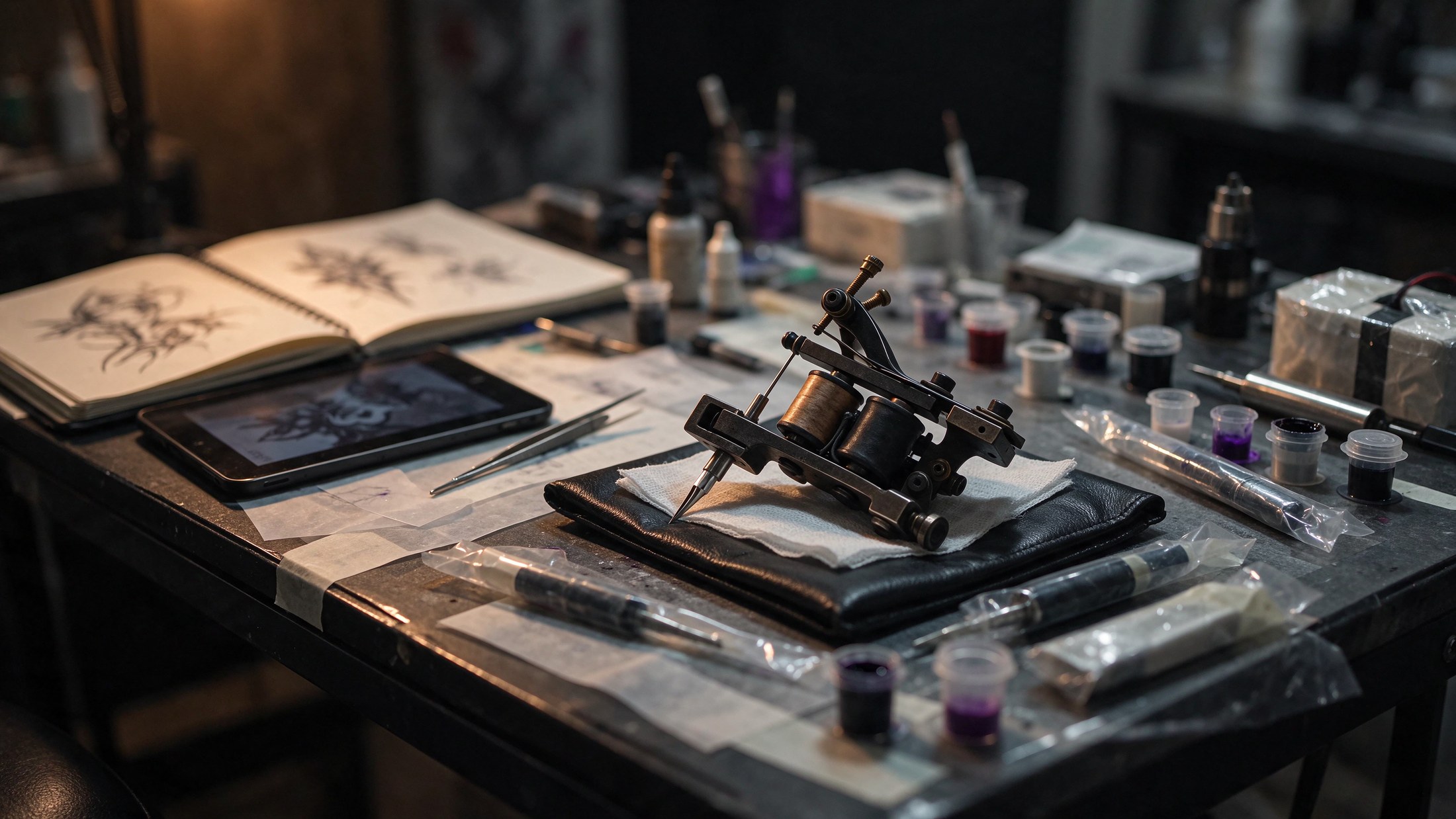
Choosing a tattoo artist is not only a search for a beautiful image. It is a search for a professional whose style, process, communication, and working standards fit your idea. The strongest booking decisions happen before a deposit is paid.
Start with the style, not the popularity
Save several examples of the kind of work you like, then look for artists who repeatedly produce that kind of work. A single impressive image can be an outlier. A consistent portfolio gives you better information.
Pay attention to line quality, value structure, color choices, composition, and how the artist uses the body as a surface. Fine-line, blackwork, realism, ornamental, traditional, illustrative, and color work each involve different strengths. Choose demonstrated fit over follower count.

Look for healed work
Fresh tattoos are useful for understanding the artist’s finish and presentation, but healed work shows how the design settles. Ask whether the portfolio includes healed examples, especially for fine detail, saturated color, portraits, or high-friction placements.
No tattoo stays exactly as it looked on day one. A good consultation explains what is likely to change and how placement, sun exposure, skin, and aftercare can affect the result.
Bring useful information to the consultation
You do not need a finished drawing. Bring your subject, references, approximate size, placement, color preferences, and any deadline. Tell the artist what is essential and what is flexible. If the design has personal meaning, share the part that matters without feeling pressured to reveal anything private.
Also tell the artist about relevant allergies, skin conditions, medications, previous reactions, and whether the area has existing work. Honest information helps the artist plan responsibly or recommend medical advice when appropriate.
Ask direct questions about policies and safety
Before booking, understand the deposit, rescheduling rules, design revisions, minimum pricing, session length, payment methods, touch-up policy, and aftercare process. Ask how the studio prepares the station and handles single-use materials. A professional answer should be clear and practical.
The FDA lists possible tattoo-related adverse effects including infection, allergic reactions, granulomas, keloid formation, scarring, and other complications. This is not a reason to panic; it is a reason to treat the decision seriously and follow qualified aftercare guidance.
Choose the right match, not simply the lowest price
Quotes vary because artists price time, experience, demand, complexity, materials, and the number of sessions involved differently. A lower price is not automatically a better value if the style match is poor or the work requires an avoidable correction later.
The right artist makes the decision feel informed. They explain what they can do, what they would change, how the design will fit, what it may cost, and what the next step is. When the portfolio and the conversation both feel right, you are much closer to a successful booking.
Five questions to answer before you place a deposit
- Does the artist regularly work in the style you want?
- Have you reviewed healed examples?
- Do you understand the deposit and rescheduling policy?
- Have you discussed size, placement, color, budget, and timing?
- Did the consultation leave you feeling informed rather than pressured?
What matters most when choosing a tattoo artist?
Choose one answer. One vote per account or browser.
Final checklist
- Does the artist regularly work in the style you want?
- Have you reviewed healed examples?
- Do you understand the deposit and rescheduling policy?
- Have you discussed size, placement, color, budget, and timing?
- Did the consultation leave you feeling informed rather than pressured?
A tattoo is permanent, but the booking decision does not need to be rushed. Take the time to find the artist whose work and process fit the piece you want to carry.