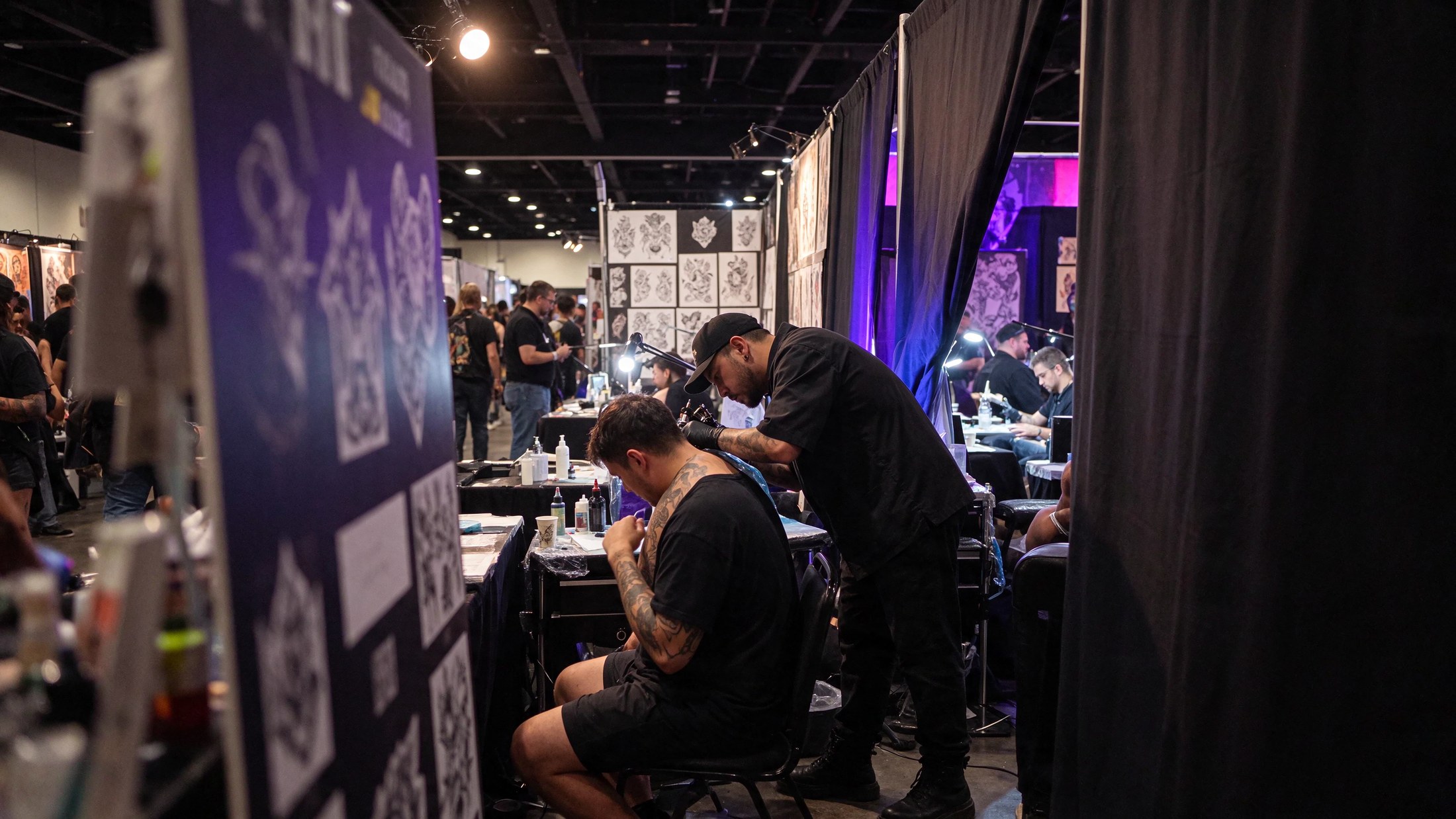
A tattoo convention can look chaotic from the outside: rows of booths, constant movement, music, flash on every wall, and conversations happening in every direction. But beneath the noise is a format that still does something digital platforms cannot fully reproduce: it puts artists, clients, shops, suppliers, and fans in the same physical room.
The portfolio becomes a conversation
Online, a portfolio is usually a sequence of images. At a convention, the artist can explain how a piece was designed, what changed during the session, and what the healed result looks like. Visitors can compare styles in real time and ask questions that are difficult to answer through a quick message.
That direct conversation is especially valuable when someone is still learning what they want. A visitor may arrive looking for “a realistic tattoo” and leave with a better understanding of the difference between micro-realism, illustrative realism, black-and-grey, and color work.
Conventions create useful professional friction
Artists also benefit from stepping outside their normal shop routine. Working alongside people with different approaches can expose an artist to new workflows, setup ideas, equipment conversations, and business practices. Those exchanges do not require everyone to work the same way. In fact, the most useful conversations often come from seeing how another artist solves a familiar problem.
For shops, conventions are an opportunity to show how their artists fit together. A well-planned booth can communicate a shop’s identity while still giving each artist room to be recognizable. Clear schedules, contact information, pricing expectations, and booking instructions help turn attention into meaningful follow-up after the event.
Planning makes the experience better
Visitors should check the event schedule, artist list, accessibility information, payment expectations, and any appointment requirements before arriving. If you hope to be tattooed, bring a clear idea of subject, approximate size, placement, and budget. You do not need a perfect drawing, but you do need to be ready for a consultation.
Artists should plan more than the booth display. Bring enough sterile and disposable supplies, prepare a clear booking process, protect private client information, and build in time for breaks. A convention is a long working day, and fatigue can affect communication and precision.
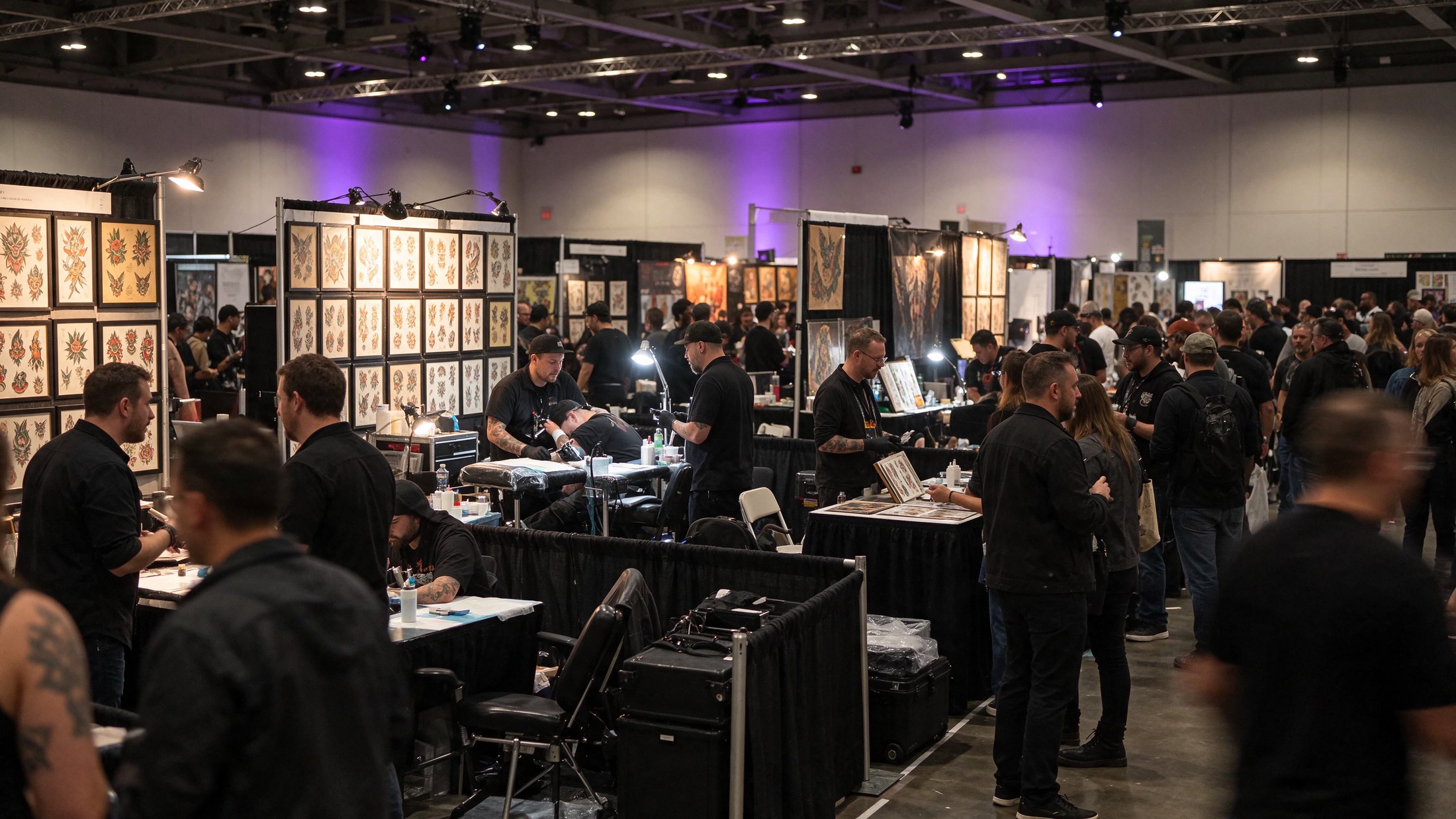
Turn a busy event into a useful one
- Artists: prepare supplies, booking details, breaks, and a clear booth workflow.
- Visitors: review the schedule, artist list, accessibility, and payment expectations.
- Consultations: bring subject, placement, approximate size, and budget.
- Follow-up: save contact details and continue promising conversations promptly.
The value after the doors close
The best convention result is not always a same-day tattoo. It may be a future consultation, a collaboration, a guest-spot invitation, a supplier relationship, or a new client who finally found the artist whose work fits their idea. The event creates the introduction; follow-through creates the long-term value.
That is why conventions continue to matter in a digital-first industry. Online discovery helps people find possibilities. In-person events help them decide which possibilities feel right.
Make the next event easier to navigate
Before attending, explore the event listing, review participating artists and shops, and save the conversations you want to continue. Afterward, follow up promptly while the consultation details are still fresh. A little preparation turns a busy convention floor into a much more useful experience.