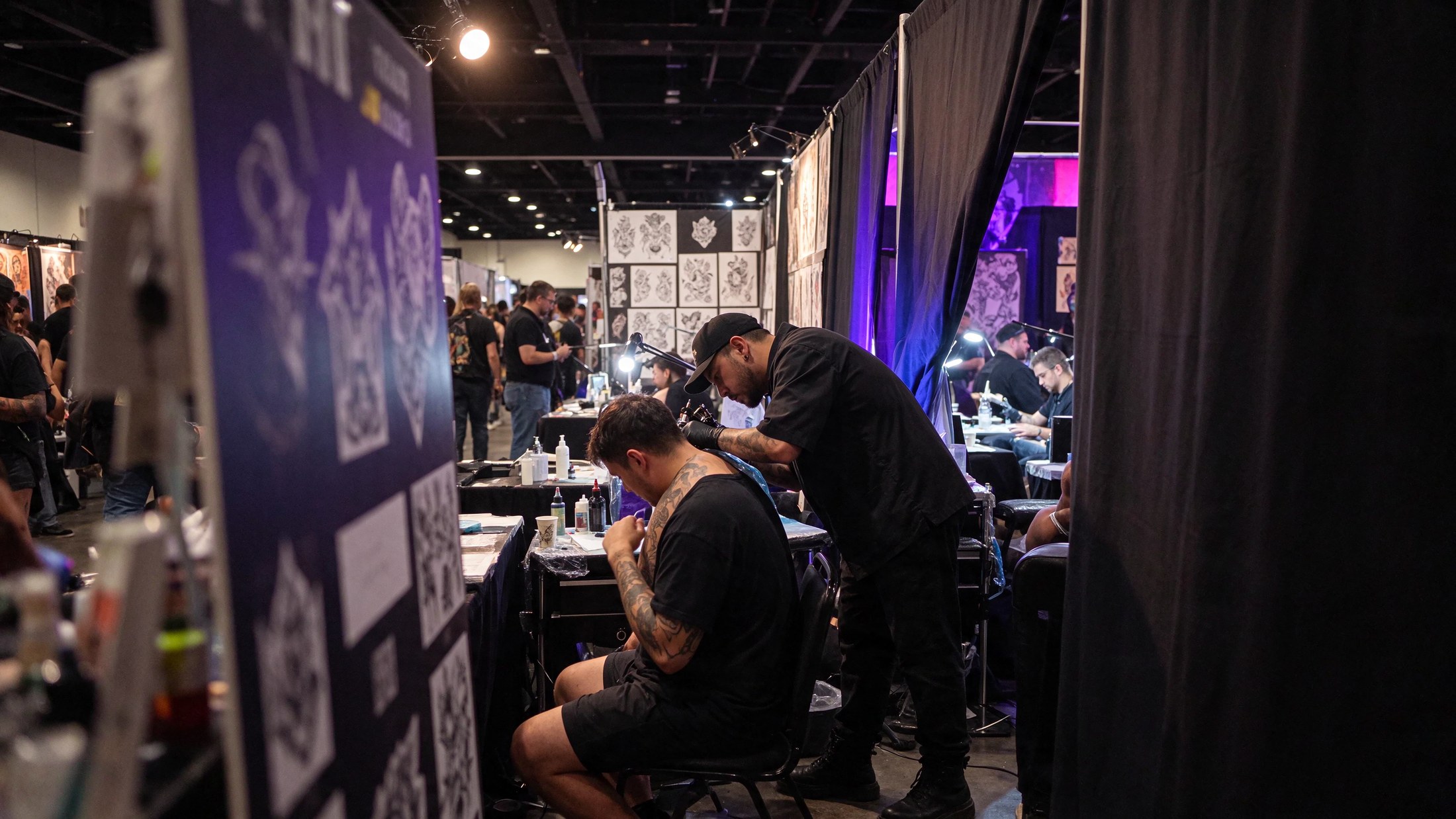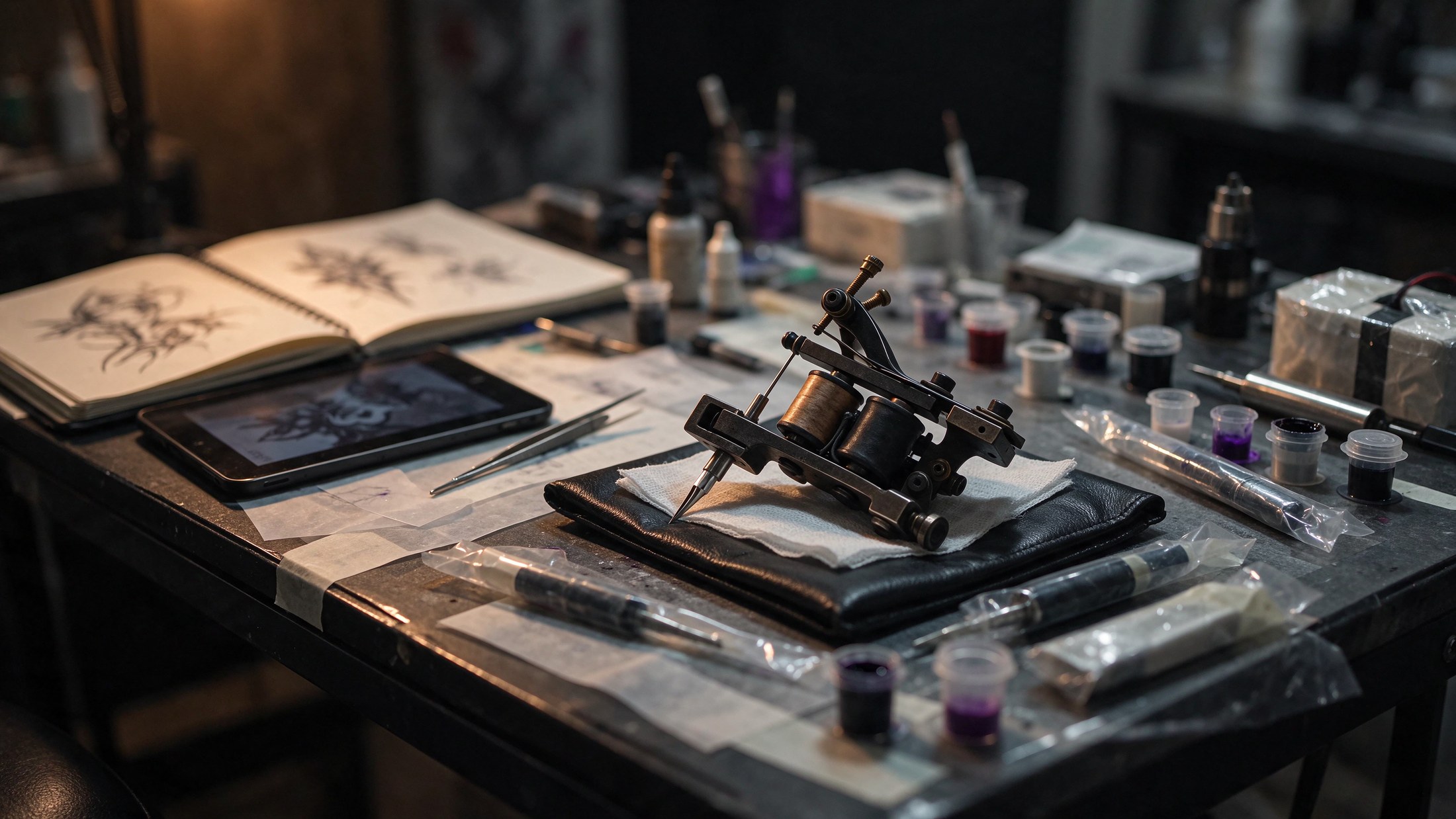
The tattoo industry is not changing in only one direction. The most meaningful shift is that artists and clients are asking better questions before the needle ever touches skin. People want to understand an artist’s specific strengths, a shop’s working standards, how designs will age, and what products are being used.
Professional standards are becoming part of the conversation
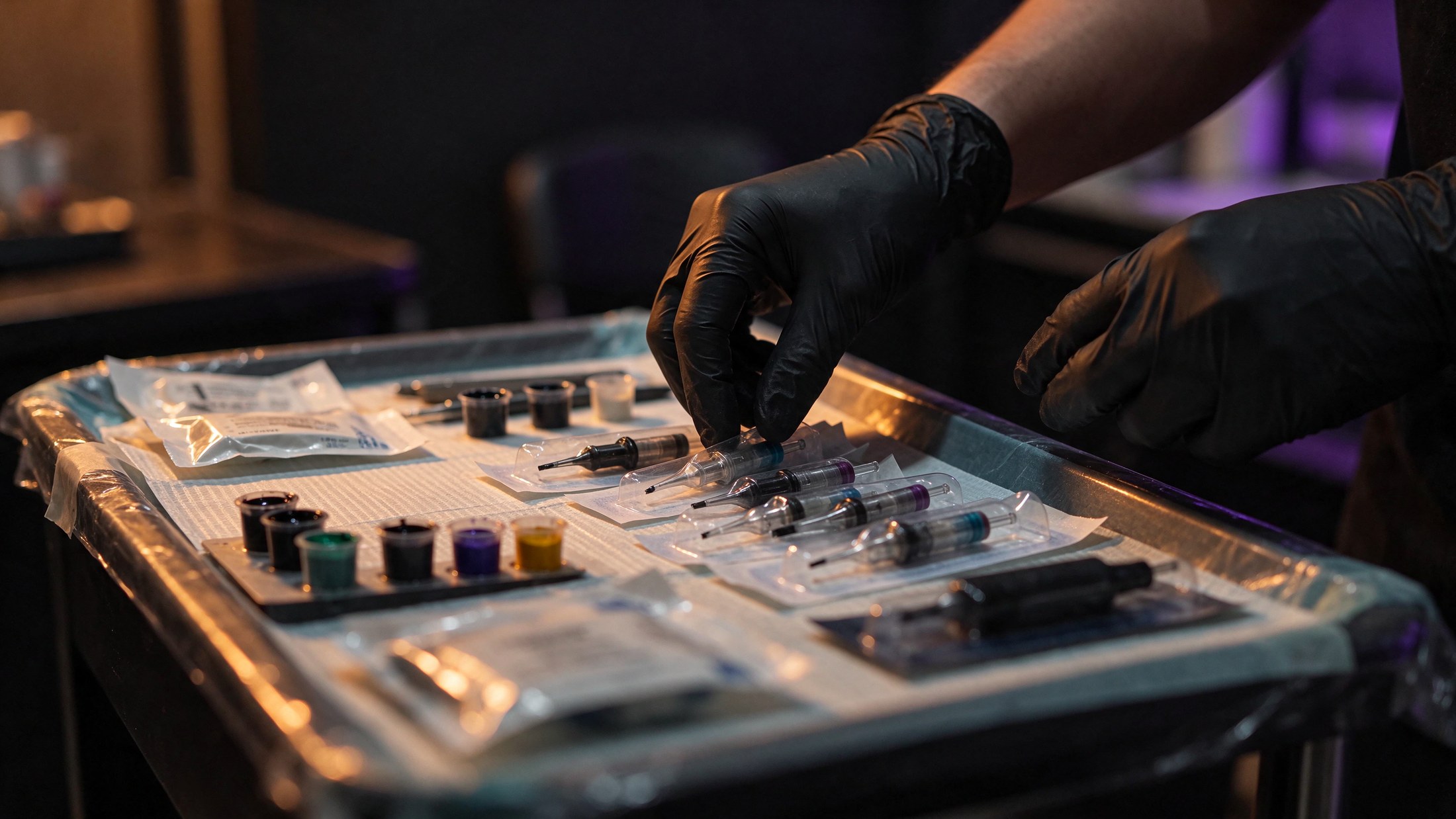
Health and safety have always mattered, but they are increasingly visible to the public. Clients are paying attention to single-use supplies, surface preparation, hand hygiene, protective barriers, and aftercare instructions. Artists are also thinking more openly about their own working conditions, including repetitive strain, sharps injuries, biological exposure, chemical handling, and the mental load of long sessions.
A 2026 scoping review in Cureus describes occupational risks for tattoo artists across biological, sharp-instrument, musculoskeletal, chemical, and psychosocial categories. Its conclusion is useful for the whole community: professional practice is not only about the finished image. It also includes the systems that protect the artist and client during the process.
What is changing in professional tattooing?
- Safety visibility: clients are asking clearer questions about setup and aftercare.
- Ink awareness: product handling and contamination control matter more in the conversation.
- Specialized portfolios: style fit is easier to evaluate before booking.
- Healed-work proof: clients want to understand how designs settle over time.
- Better communication: clear policies reduce mismatched expectations.
Ink transparency deserves more attention
Tattoo inks are introduced into the dermal layer of the skin, which makes manufacturing, storage, and contamination control important. The U.S. Food and Drug Administration notes that tattooing practices are generally regulated by local jurisdictions, while tattoo inks fall within the agency’s cosmetics framework. The FDA also warns that pigments and products can present health risks and encourages reporting adverse reactions.
That does not mean clients need to become chemists. A good consultation can include simple questions: What brand and color family will be used? How are opened products handled? What aftercare is recommended? What should happen if the skin reacts unexpectedly? A professional artist should be comfortable answering clearly and without defensiveness.
Portfolios are becoming more specific
“Good artist” is no longer enough information for a booking decision. Clients are comparing healed work, looking for consistency in a particular style, and checking whether an artist regularly works at the scale and placement they want. Fine-line, micro-realism, blackwork, color realism, ornamental work, and patchwork each require different decision-making.
The strongest portfolio is not necessarily the largest one. It is the clearest one. A focused portfolio helps the right client recognize the right artist faster, while honest captions and consultation details reduce mismatched expectations.
What this means for artists and clients
Artists can benefit from documenting healed work, explaining their process, maintaining clear policies, and keeping their public profiles current. Clients can benefit from bringing references, sharing placement and size ideas, asking about healed results, and choosing an artist for demonstrated skill rather than a low quote alone.
The headline for 2026 is simple: better information leads to better matches. The tattoo remains personal and permanent, but the path to it is becoming more informed, more transparent, and more professional.